
Gas Fire Suppression Systems
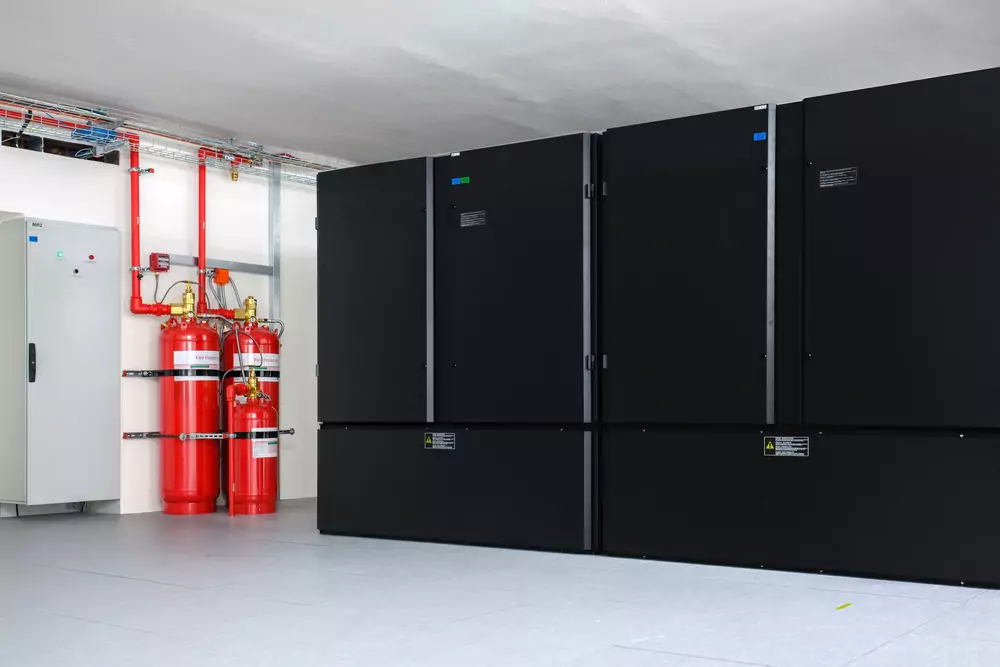
A gas fire suppression system is a waterless fire extinguishing method that relies on releasing a gas into the fire zone to smother and extinguish the flames. These systems are used in areas containing sensitive equipment or hazardous materials, such as server rooms and electrical rooms, and work by reducing the oxygen level or cooling the heat to quickly extinguish the fire.
How It Works
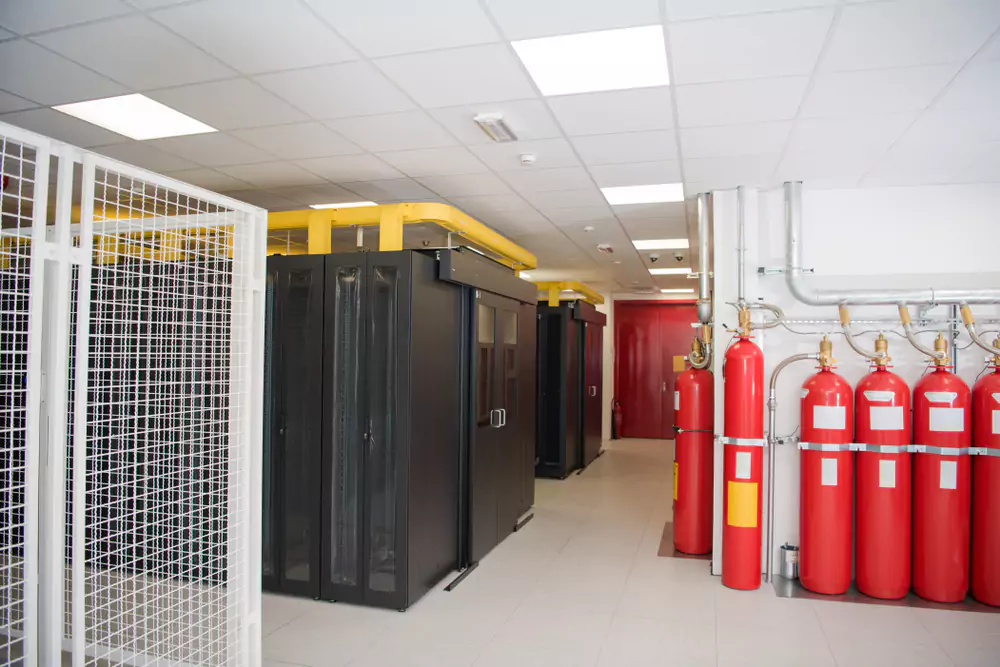
Gas fire suppression systems consist of gas cylinders, pipes, and diffusers.
When a fire is detected, a specific amount of gas is released into the burning area.
The gas reduces the oxygen concentration in the air, eliminating a key element in the fire triangle.
In some cases, the gas also absorbs excess heat or disrupts the chemical reactions that fuel the fire.
Types of Gases Used
Inert Gases: Such as nitrogen and argon, these work by reducing the oxygen concentration while maintaining clear visibility during release, making them safe for populated areas.
Carbon Dioxide (CO2): Used to extinguish fires involving electronic equipment, it reduces both the oxygen level and the heat of the fire.
Halocarbon systems: such as FM200 and Novec 1230 gases, which extinguish fires quickly by neutralizing free radicals or cooling the heat.
Advantages
No damage: Unlike water or some other chemicals, it does not leave a clean residue on sensitive equipment or property.
Fast and effective: Released rapidly to extinguish fires within seconds.
Safe: Considered safe for use in occupied spaces, provided safety margins are maintained.
Applications
Server rooms.
Electrical and generator rooms.
Industrial and commercial kitchens.
Storage rooms.
The FM200 extinguishing system is a fire protection system that uses HFC-227ea (heptafluoropropane) gas to extinguish fires quickly and efficiently without damaging equipment or the premises. It works by cooling the fire source and reducing oxygen levels. It is stored in pressurized cylinders and released within 10 seconds of fire detection. This system is safe for use in populated areas, such as data centers and server rooms, and is environmentally friendly and does not deplete the ozone layer.
System Operation and Characteristics
Operation: The system is automatically activated by fire sensors and releases the gas through a network of pipes and sprinklers.
Speed of Response: It extinguishes fires very quickly, often within 10 seconds or less, minimizing damage and losses.
Impact on Equipment: It is considered a “clean agent” because it evaporates quickly and leaves no residue, making it ideal for sensitive electronic equipment and locations that cannot withstand water damage.
Safety: The gas is colorless, odorless, and non-conductive, making it safe for use in populated areas when used according to specified standards and specifications.
Environmental Protection: It does not deplete the ozone layer and has a minimal environmental impact compared to catastrophic fires.
Common Applications
Data Centers and Server Rooms
Communications Switchboards
Electrical Equipment Enclosures
Generator Rooms
Archives and Museums
Sensitive Areas Requiring Rapid and Precise Protection
A CO2 fire suppression system is a fire suppression system that uses carbon dioxide gas stored under high pressure. It works by displacing oxygen from the fire area, smothering the flames and stopping combustion, while also reducing heat. It leaves no residue after use, does not damage sensitive property, and is highly effective at quickly extinguishing fires.
Mechanism of Operation
Activation: When heat and smoke sensors detect a fire, the system is activated.
Release: Carbon dioxide gas is released from cylinders stored under high pressure through a network of pipes and nozzles.
Extinguishment: The gas displaces the oxygen surrounding the fire, significantly reducing its concentration and interrupting the combustion process.
Cooling Effect: The gas absorbs heat from the fire area, further reducing the temperature and rapidly extinguishing the flames.
Main System Components
Storage Cylinders: Contain compressed carbon dioxide gas.
Pipe Network: Distributes the gas throughout the area to be protected.
Spray Nozzles: Distribute the gas within the fire zone.
Control and Alarm System: Includes sensors, control panel, audible and visual alarms, and activation switches.
System Features
Effective: Extinguishes fires very quickly, reaching a certain extinguishing concentration in less than 60 seconds.
Less-Free: Leaves no residue or deposits after use and requires no cleaning, making it suitable for sensitive equipment.
Electrically Insulating: Does not conduct electricity, making it safe for electrical fires.
Environmentally Friendly: Does not deplete the ozone layer.
Important Considerations
Safety: Carbon dioxide gas is toxic at high concentrations; therefore, the system should be used in unoccupied areas.
Ventilation: After using the system, the area must be thoroughly ventilated to restore normal oxygen levels.
Types of Fires: Primarily effective for electrical fires and fires in enclosed spaces, but may not be ideal for deep fires or fires involving solid materials.
An aerosol fire suppression system is a modern fire protection system that uses the release of fine chemical particles to extinguish fires quickly and efficiently by reducing oxygen concentration, cooling the flames, and inhibiting chemical reactions. The system is safe for use around sensitive electronic equipment and leaves no physical residue after fire suppression.
How It Works
Detection: The system automatically activates upon detecting a fire via heat sensors.
Activation: After fire detection, the system is activated within seconds.
Release: The aerosol fire suppression unit releases a gas containing very fine solid particles.
Extinguishing: These particles disperse in the area surrounding the fire, resulting in:
Flame Cooling:
Our benefits
- Gas systems for extinguishing fires
- Protect sensitive areas
- Such as server rooms and electrical facilities.